
Care Assistant Night Shifts: Practical Tips For Working Safely And Effectively

Care assistant night shifts involve providing direct support to people with care needs during overnight hours, with an emphasis on monitoring, personal care, and maintaining a safe environment. Night work typically requires adapting daytime routines to a quieter setting, attending to medication schedules, assisting with toileting and mobility, observing changes in condition, and documenting notable events. The role often includes balancing proactive checks with respecting sleep and rest, while ensuring that any emerging needs are identified and communicated to on-call clinical staff or daytime teams. Night shifts may occur in residential care homes, assisted living settings, hospice environments, or private domiciliary care arrangements.
During a night shift, routines often center on structured handovers, regular observation rounds, and the use of tools to record events and risks. Care assistants may rely on written or electronic handover notes, basic vital sign checks where trained, and agreed protocols for escalation if a person’s condition changes. Tasks are typically sequenced to minimize unnecessary disturbance while meeting essential needs; for example, combining medication rounds with scheduled checks or repositioning. Night work can require situational awareness for environmental hazards, effective communication with colleagues on different shifts, and accurate documentation that informs subsequent daytime care planning.
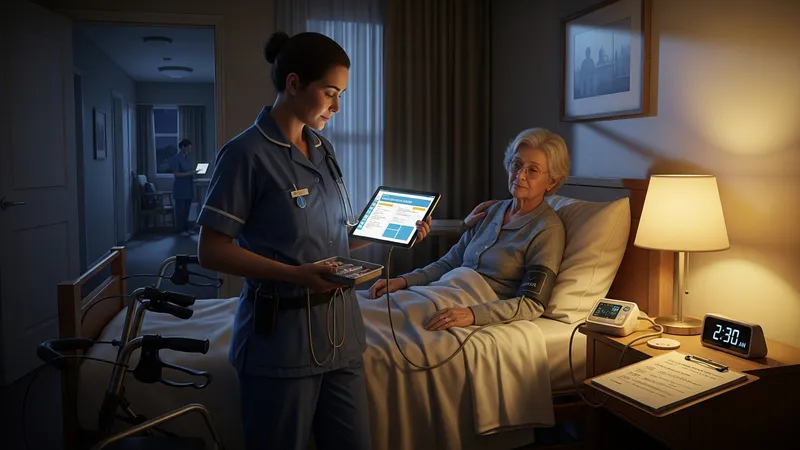
- Standardized handover checklist — a written or printed checklist used to convey current needs, risks, and outstanding tasks between shifts; may be adapted from local care policies.
- Night observation protocol — a set of agreed observation points and frequency, such as mobility checks, continence support, and breathing/alertness monitoring, tailored to individual care plans.
- Digital shift reporting tools — mobile or web-based logging systems for recording observations, incidents, and handovers; examples include basic electronic records used by many care providers to maintain continuity.
Night shift work differs from daytime care in the pattern and pacing of activity. Overnight, there may be fewer staff and a higher need to prioritize duties; routine checks can be spaced to reduce sleep disturbance, yet must be frequent enough to detect deterioration. Some settings use risk stratification to set check frequencies, where residents with higher risk profiles receive more frequent rounds. Equipment such as bed sensors or low-level lighting may be used to reduce falls or facilitate safe transfers. Staffing arrangements and local policies typically determine the scope of tasks a care assistant may perform independently versus those requiring clinical oversight.
Risk management on night shifts focuses on preventing falls, avoiding adverse events, and ensuring timely escalation when needed. Common preventive measures include environmental checks for trip hazards, securing loose rugs or cords, ensuring assistive devices are within reach, and confirming that call systems are functioning. Documentation of any change or near-miss is important for continuity and for informing adjustments to care plans. Training in manual handling and safe use of equipment may be scheduled to address night-specific risks; these trainings often emphasize practical steps that can be applied during quieter hours to reduce harm.
Communication and documentation practices during the night may rely on both concise written notes and brief verbal handovers to the incoming team. Effective handovers typically summarize current status, recent events, pending actions, and any anticipated risks for the next shift. Electronic reporting tools can provide timestamps and structured fields that reduce ambiguity; however, written notes remain common in many settings. Records made overnight are used by clinical staff and managers to review incidents, adjust monitoring schedules, and update individual care plans. Confidentiality and accuracy are central, and entries may be reviewed during routine audits or supervision.
Supporting people overnight commonly involves a mix of personal care tasks, mobility assistance, comfort measures, and observation. Tasks often include toileting support, repositioning to reduce pressure injury risk, offering fluids where appropriate, and providing reassurance for anxiety or disorientation. Non-pharmacological approaches to sleep disturbance can be part of routine care, such as gentle lighting, reduced noise, and calming communication. Assistive devices like transfer belts, slide sheets, or bed rails may be used according to risk assessments and care plans. Staff should follow local protocols when intervening and record any changes observed for ongoing assessment.
In summary, night-shift care assistant work centers on maintaining safety, continuity, and comfort during overnight hours through structured routines, observation, and clear documentation. Practical examples include using standardized handover checklists, night observation protocols, and digital reporting tools to support consistent practice. These approaches may reduce communication gaps and inform daytime care planning. The next sections examine practical components and considerations in more detail.