
Single Mom Housing: Practical Strategies For Navigating The Rental Market

This article explains practical approaches for a single parent working through the rental housing process. It focuses on common tasks such as locating suitable listings, assessing lease terms, estimating ongoing costs, and identifying public or nonprofit resources that may assist with housing stability. The description is informational: it outlines typical challenges single parents face in rental markets and the types of strategies that may be used to address them without making guarantees or prescribing a single path.
The material that follows breaks the topic into concrete components: search methods, budgeting and expense management, documentation and lease considerations, neighborhood factors, and longer-term planning for housing stability. Each section aims to describe what is often involved, what trade-offs may occur, and which practical options are typically available to consider. The tone remains neutral and factual, noting that outcomes can vary by personal circumstances and local market conditions.
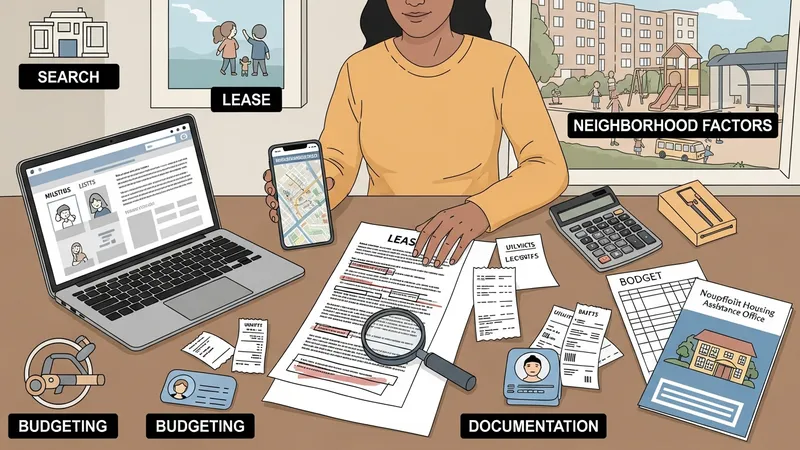
- Shared living arrangements — Co-renting or shared housing where household members split rent and utilities; may reduce monthly housing cost per person and often requires clear written agreements about responsibilities.
- Public and nonprofit rental assistance — Local or national programs that provide subsidies, waitlisted housing, or emergency rent support; availability and eligibility criteria can vary by jurisdiction.
- Financial planning tools — Rent calculators, budgeting spreadsheets, and rental-affordability checklists that help estimate typical monthly housing costs including rent, utilities, and incidentals.
Shared living arrangements can provide immediate reduction in housing expense obligations by dividing rent and utilities among several adults. Such arrangements typically require clear communication about chores, guest policies, and bill payments, and may benefit from a written roommate agreement. Potential considerations include compatibility with children’s routines, the impact on privacy, and how lease liability may be structured if multiple adults are listed on a lease. Assessing these factors can help determine whether shared housing is a practical short- or medium-term option.
Rental assistance from public or nonprofit sources often follows set eligibility rules that consider household size and income relative to local thresholds. Programs may operate with waiting lists and require specific documentation such as proof of income, identification, and family composition. While assistance can reduce rent burden, availability often depends on funding levels and local program capacity. Understanding typical application steps and gathering required documents in advance can make program interactions more efficient when seeking this type of support.
Financial planning tools may include simple budgeting templates, rent-to-income ratio calculators, and utility-estimate worksheets that help project monthly obligations. Many households aim to keep housing costs within a certain portion of monthly income, though specific targets can vary by circumstance and local cost of living. These tools can also account for non-rent expenses like transportation, childcare, and incidental home supplies. Using conservative estimates for variable costs often provides a clearer sense of what housing options are realistic.
Lease and documentation considerations frequently influence whether a particular rental is accessible. Landlords may request proof of income, references, credit information, a security deposit, and tenancy history. For single parents without extensive rental history or with variable income, alternatives such as a cosigner, reference letters, or proof of consistent alternative income streams may be relevant. It is useful to review lease clauses on repairs, guest policies, and termination to understand obligations and potential conflicts ahead of signing.
In summary, practical approaches to renting while parenting alone typically combine several elements: evaluating cost-sharing options, exploring assistance programs, using budgeting tools, and preparing required documentation. Each component may reduce specific barriers but will depend on local conditions and individual circumstances. The next sections examine these practical components and considerations in more detail.