
Australia Farm Work Visa: Overview Of Eligibility, Age Limits And Skill Requirements

Visa pathways that permit temporary agricultural work in Australia cover a range of arrangements managed by federal agencies and cooperating employers. These pathways define who may be eligible, the kinds of work allowed, and the duration of permitted stay. Distinct visa streams may focus on youth exchange, short‑term specialist roles, employer‑sponsored skilled work, or seasonal labour programs coordinated with partner countries. Each stream typically establishes criteria for age, skill level, sponsorship or nomination, health and character checks, and specific documentation for the type of agricultural activity concerned.
Key elements that shape eligibility for these agricultural work streams often include nationality or residence status, whether the person meets age thresholds, the presence of a qualifying sponsor or employer, and any required skills assessments or certificates. Some streams are intended for young travellers who can combine travel and temporary field work, while others are intended for workers in defined occupations with employer nomination. Seasonal schemes may involve placement through authorised providers or bilateral agreements and can carry additional conditions such as regional work requirements or minimum hours.
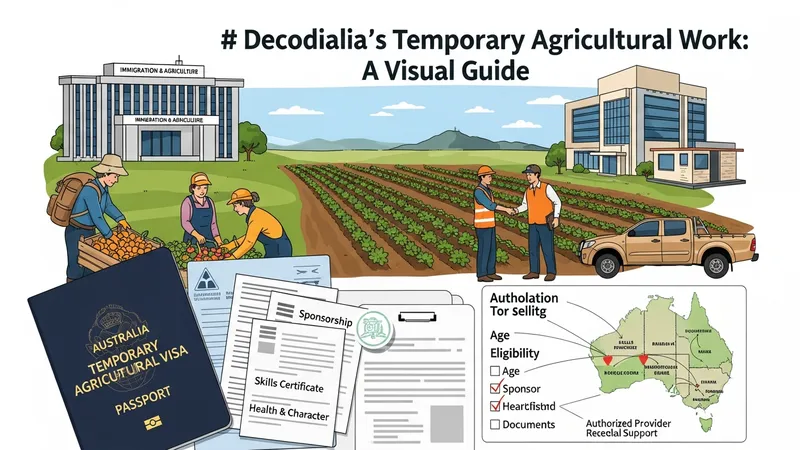
- Working Holiday visa (subclass 417) — Allows eligible young nationals to undertake short-term work, often including agricultural work, as part of travel in Australia; age limits and country lists typically apply.
- Work and Holiday visa (subclass 462) — Similar to subclass 417 but with a different eligible-country list and additional documentation requirements for some applicants.
- Temporary Skill Shortage (TSS) visa (subclass 482) — Employer‑sponsored route for nominated skilled occupations that may include agricultural technical roles when listed; requires employer nomination and, in many cases, evidence of skills or qualifications.
- Seasonal Worker Programme / Pacific labour arrangements — Managed through intergovernmental agreements and authorised providers to place workers in specified seasonal agricultural roles; eligibility, duration, and recruitment pathways are regulated.
Different visa streams may impose age thresholds that affect eligibility. Working Holiday and Work and Holiday visas commonly set an upper age limit that may vary by nationality; applicants often need to be in their late teens to early thirties, with some countries allowing up to 35. Other employer‑sponsored subclasses do not use an upper age limit in the same way but focus on occupation lists and skill levels. Age limits may also interact with rules for secondary applications or extensions, and some seasonal programs define participant cohorts by bilateral agreements with sending countries.
Skill and qualification requirements vary across pathways and may include formal qualifications, trade certificates, or evidence of experience. For employer‑sponsored skilled visas, applicants typically need to demonstrate that their occupation appears on an appropriate list and may undergo a skills assessment by a designated assessing authority. For short‑term or seasonal placements under specific programs, practical experience and employer references can play a larger role than formal credentials, though checks for relevant licences or safety training may still be required.
Documentation and administrative checks form a constant element across these streams. Common requirements include national identity documents, police clearance or character certificates, medical assessments where the period of stay or the applicant’s circumstances trigger health checks, and proof of any sponsorship or nomination. Where regional or industry‑specific conditions apply (for example, minimum hours, accommodation arrangements, or farm placement evidence), additional forms or declarations may be requested by the visa authority or designated program administrators.
Seasonal arrangements may include workplace safety, accommodation standards, and employer obligations that influence both eligibility and the practical aspects of participation. Employers or authorised providers often must register, demonstrate capacity to host workers, and comply with workplace relations and occupational health standards. Workers may need to meet specific on‑site training or induction requirements, and their entitlement to work rights and social protections can vary by visa type and program rules. These factors typically inform whether a visa holder can lawfully engage in particular agricultural tasks.
In summary, pathways that permit agricultural work in Australia encompass several visa categories, each with distinct eligibility elements such as age thresholds, skill requirements, sponsorship arrangements, and documentation checks. Understanding which stream aligns with an individual’s circumstances typically requires reviewing the specific criteria of the visa subclass or program. The next sections examine practical components and considerations in more detail.