
Cold Email AI Tools: Understanding Automated Outreach And Personalization

Workflow and integration considerations for Cold Email AI Tools: Understanding Automated Outreach and Personalization
Workflows for automated outreach commonly involve stages for list preparation, message design, sequence configuration, monitoring, and reconciliation with downstream systems. Integration with CRMs, recruitment systems, or marketing databases often affects how contacts are routed and synchronized. Two-way integrations that update CRM records on replies or bounces can reduce manual reconciliation work. Workflow design may also include guardrails, such as suppression lists or pause conditions, to reduce negative interactions with recipients and maintain cleaner sender reputation metrics.
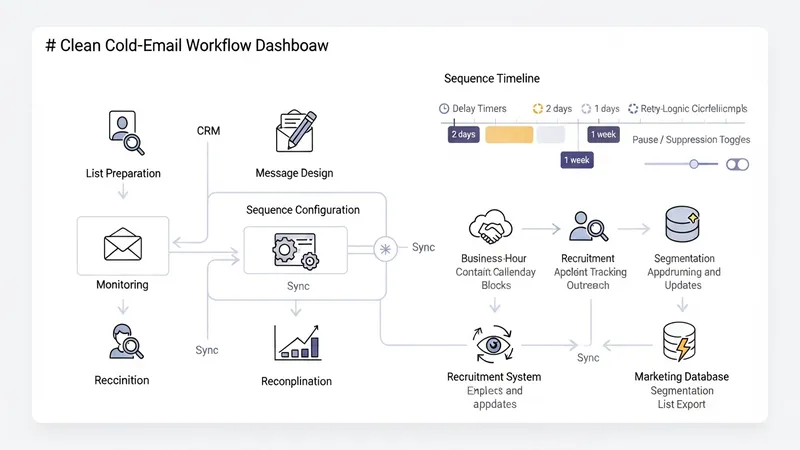
Timing and cadence settings are practical levers in sequence configuration. Tools typically let users set delays between steps, identify business hour windows, and specify retry logic after bounces or soft errors. These parameters may influence engagement signals and deliverability; for example, sending high volumes within short windows can trigger provider throttles. Many teams adopt gradual ramp-ups in send volume or segment sends by IP/domain to observe how delivery outcomes evolve, viewing these changes as empirical observations rather than guaranteed improvements.
Integration mapping should consider identity resolution and deduplication. When contacts exist across multiple systems, matching logic (email address normalization, canonical identifiers) matters to prevent duplicate sends. Some integration architectures use unique keys or hashed identifiers to link records across systems. Where this linking is imperfect, suppression and deduplication steps within the outreach tool can reduce accidental repeats. These are operational considerations to manage contact lifecycle integrity across platforms.
Operational governance often addresses role assignments, approval flows, and retention policies for templates and contact lists. Setting limited role permissions for sequence publishing, establishing template review steps, and defining retention windows for contact data can help manage risk. Organizations may treat these governance elements as internal controls to ensure consistent use and to document rationale for outreach practices, rather than as features that guarantee compliance.