
FHA Loans: Understanding Requirements For Bad Credit Home Buyers

FHA Loans: Down Payment Requirements and Mortgage Insurance Factors
Down payment expectations for FHA-insured loans are usually lower than many conventional programs, with minimum percentages often cited in FHA policy; actual acceptable amounts can vary based on credit score levels and lender overlays. Borrowed or gifted funds are sometimes permissible for the down payment, subject to specific documentation and source verification rules. The interaction between down payment size and mortgage insurance premiums commonly affects both initial closing costs and recurring monthly payment obligations.
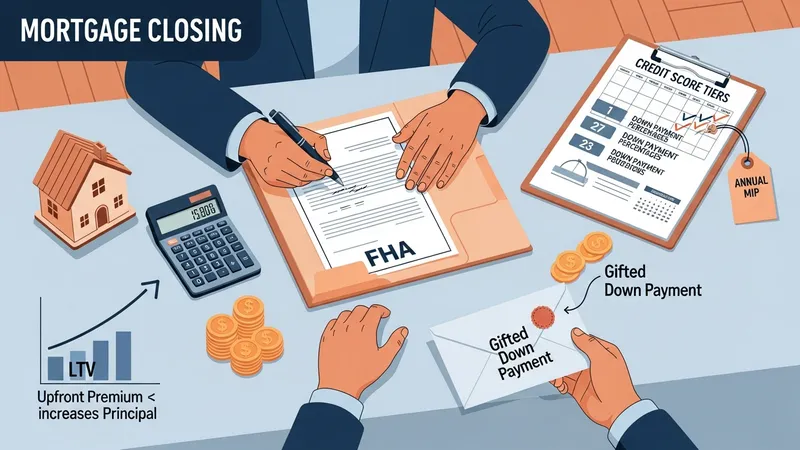
Mortgage insurance for FHA loans commonly includes an upfront premium and an annual premium expressed as a percentage of the loan balance. The upfront premium can often be financed into the loan amount, which increases the principal balance and thus the effective loan-to-value ratio. Annual premiums are typically divided into monthly portions and incorporated into housing payments. The length of time mortgage insurance applies may vary by initial loan-to-value and program year rules.
The influence of down payment on loan-to-value (LTV) ratios may change eligibility for certain mortgage insurance rate tiers; higher down payments often lower LTV and can reduce annual insurance costs in some program scenarios. Borrowers who can increase their down payment by saving or using eligible gifts may see adjustments to monthly mortgage insurance expenses, although precise impacts depend on program rules in effect at the time of underwriting.
Lender overlays are private lender requirements that can add to FHA minimums and sometimes increase down payment expectations or credit standards. These overlays may be adopted to manage lender risk and are separate from FHA’s baseline criteria. Prospective borrowers may encounter variations among lenders in how overlays are applied, so understanding lender-specific requirements alongside FHA rules is often informative.