
Home Renovation: Improving Layout, Functionality, And Space Use

Lighting, electrical, and environmental systems that support functionality
Layered lighting typically divides illumination into task, ambient, and accent components so that different activities are supported independently. Task lighting—over work surfaces and reading areas—may be localized and brighter, while ambient lighting provides overall illumination and accent lighting emphasizes features or storage. Repositioning fixtures and adding dimming controls can create flexible conditions for varied activities. During renovation, planners often identify opportunities to add circuits or relocate outlets to align with new furniture and appliance placements, reducing reliance on extension cords and improving electrical safety.
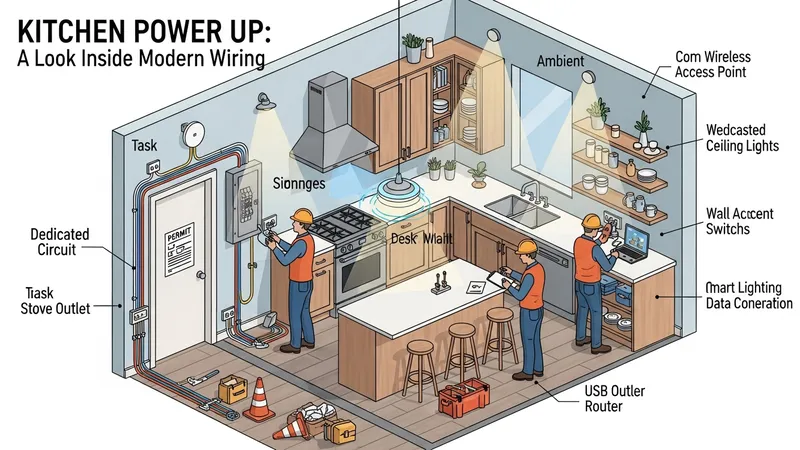
Electrical upgrades undertaken as part of functional renovations may include adding dedicated circuits for major appliances, increasing outlet density in remodeled kitchens, or installing low-voltage wiring for integrated systems. Where data connectivity is important, planning for conduit runs or strategic wireless access points can support current and future equipment. Any changes to electrical systems should be reviewed in relation to local codes and typically performed by licensed electricians; this coordination can affect permitting timelines and inspection requirements. These considerations help align functionality improvements with safety and compliance needs.
Environmental systems—insulation, ventilation, and thermal control—interact with layout and functionality when renovations expose or alter building envelopes. Improving insulation or adding targeted ventilation in moisture-prone zones (bathrooms, utility rooms) can protect stored items and finishes. Consideration of heat gains in open-plan living areas and the placement of HVAC supply registers relative to seating and storage can influence comfort and energy use. When modifying room boundaries, reassessing heating and cooling distribution often ensures that functional improvements are not offset by uncomfortable microclimates.
Lighting and environmental controls may also support accessibility and aging-in-place objectives by simplifying operation and enhancing visual comfort. Features such as rocker switches at accessible heights, consistent task lighting near work surfaces, and clear contrast between floor and wall finishes can improve usability for a wider range of occupants. These measures are typically framed as design considerations rather than requirements, and their implementation depends on budget, technical constraints, and the intended duration of occupancy.