
Kitchen Grease Removers: Choosing Heavy Duty Formulas For Commercial And Home Use

Cleaning requirements and maintenance practices for commercial and home kitchens
Maintenance patterns and cleaning frequency often differ between commercial and residential settings due to volume of use and regulatory expectations. Commercial kitchens may follow scheduled cleaning intervals—daily wipe-downs, weekly hood and filter degreasing, and periodic professional deep cleans—aligned with food safety management plans. Residential kitchens commonly use less frequent heavy-duty degreasing, addressing visible buildup or odor and performing seasonal deep cleaning. Scaling cleaning efforts to match use patterns can often extend equipment life and reduce the need for more aggressive chemistry.
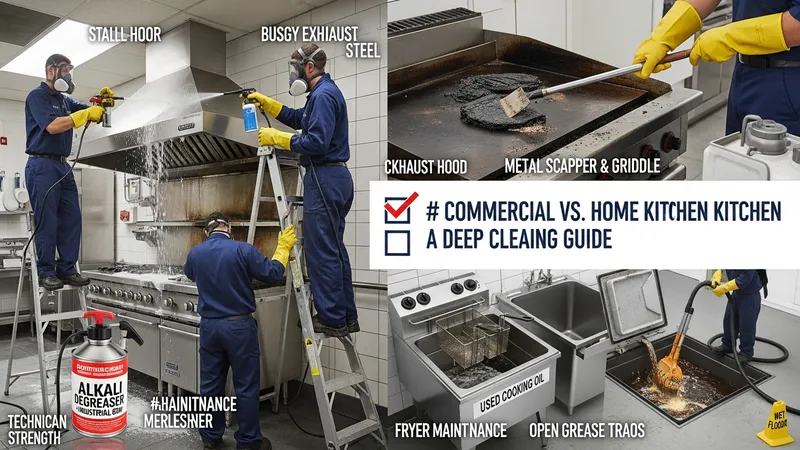
Equipment-specific maintenance affects cleaning choices and intervals. Fryers, griddles, ovens, and exhaust hoods accumulate different kinds of residues that may require tailored formulas and techniques; for instance, combustion byproducts and carbonized deposits on griddles may require stronger alkaline or solvent action combined with manual scraping. Filters and grease traps in both settings benefit from routine service to prevent saturation and carryover, and scheduled replacement or cleaning of filters can often reduce the intensity of chemical interventions needed.
Training and documentation are operational elements that can improve consistency and safety. Commercial operations frequently maintain cleaning logs, use manufacturer- or supplier-provided technical data sheets, and document procedures within broader sanitation plans. In residential contexts, maintaining simple instructions on dilution ratios, safe handling, and material compatibility can support safer use. Both contexts may find value in periodic review of procedures to adapt to changes in equipment, products, or regulatory guidance.
Long-term maintenance planning includes balancing cleaning chemistry, mechanical care, and inspection routines. Regularly addressing minor grease accumulation may often prevent the development of thick, polymerized deposits that require more aggressive treatments. Choosing cleaning intervals and methods that align with equipment sensitivity, available ventilation, and waste-handling capacity can help manage costs and safety considerations over time. A planned approach to maintenance typically supports predictable cleaning outcomes without relying on extreme or one-off interventions.