
Full Service Spa Experience: A Guide To Massage, Skin Care, And Body Treatments

The full-service spa experience is a coordinated set of personal care services and facility features that address relaxation, skin maintenance, and body treatments in a single setting. It typically blends hands-on services such as massage and facial treatments with facility-based features like steam rooms, hydrotherapy, and relaxation lounges. The emphasis is on an integrated visit where different modalities are sequenced, staff roles are defined (therapists, estheticians, attendants), and the environment is managed to support comfort and privacy. This concept focuses on procedural variety, scheduling flow, and client assessment rather than product sales or clinical claims.
Within a full-service spa environment, services may be offered singly or combined into treatment plans that account for timing, client preferences, and procedural compatibility. Intake consultations and brief health screening questions are often used to determine suitable modalities and to identify considerations such as skin sensitivity or recent injuries. Facilities commonly maintain separate rooms for massage, facial treatments, and body procedures; support areas for changing and relaxation; and systems for sanitation, ventilation, and laundry. Staffing and protocol design aim to ensure consistent service sequencing and hygienic handling of linens and instruments.
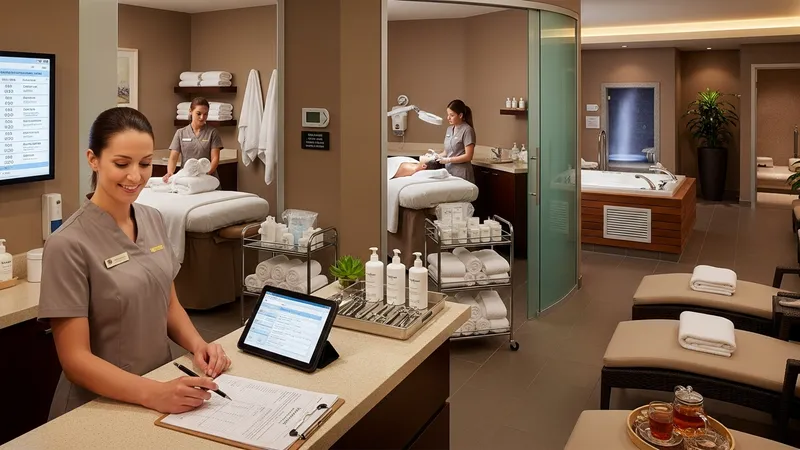
- Swedish and modality-based massages — hands-on techniques that may include effleurage, petrissage, and varying pressure levels, typically delivered in 30–90 minute sessions as part of an integrated spa itinerary.
- Facial and skin care procedures — cleansing, exfoliation, masks, and non-invasive devices such as LED or suction-based treatments; these often begin with a skin analysis and may include multiple steps for cleansing, exfoliation, and hydration.
- Body treatments and hydrotherapy — body scrubs, wraps, salt or oil exfoliations, and wet-area therapies such as steam, sauna, or contrast baths; these services can be standalone or paired with massage and skin care steps.
Massage modalities within a full-service spa may be selected to complement skin care and body treatments. For example, a lighter manual massage may follow a facial to support relaxation without stressing facial tissues, while deeper techniques may be reserved for separate sessions. Session length and sequencing are often planned to allow time for changing, showering, and interim rest. Staff training typically covers technique fundamentals, client communication, and basic contraindication recognition so that therapists may adapt pressure and method to client comfort and any noted sensitivities.
Skin care procedures in this setting usually begin with an intake and skin assessment to identify texture, sensitivity, and client goals. Non-prescriptive facial protocols often combine cleansing, mechanical or chemical exfoliation at conservative levels, serums, masks, and massage of the face and neck. Devices such as LED panels, microdermabrasion tools, or low-level suction systems may be offered within scope-of-practice guidelines; spas commonly recommend patch testing for more active procedures and advise on gentle post-treatment care to support recovery and comfort.
Body treatments and hydrotherapy options provide tactile and thermal variety and may complement massage and facial sequences. Exfoliating scrubs and wraps can be scheduled before moisturizing or massage steps to allow product removal and enhance absorption. Wet-area features such as steam rooms, saunas, or contrast showers are typically managed for temperature control, sanitation, and occupant safety; clear signage and staff oversight often support appropriate use. Facility design may separate wet and dry zones to maintain hygiene and operational flow.
Operationally, appointment structure in full-service spas commonly includes arrival buffer time for check-in, an intake discussion, the treatment itself, and a short recovery or relaxation interval. Pricing and duration options can vary widely across operators and regions, and publicly stated ranges often reflect that variability rather than fixed standards. Record-keeping and client preference logs may be used to maintain continuity between visits. Environmental controls — lighting, acoustics, temperature, and scent — are often calibrated to support comfort while allowing personalization where feasible.
In summary, a full-service spa experience describes a coordinated mix of massage, skin care, and body treatments delivered within facility settings that manage sequencing, hygiene, and client comfort. The model emphasizes assessment, procedural compatibility, and facility features that together create an integrated visit. The next sections examine practical components and considerations in more detail.