
Same Day Tooth Replacement: Understanding Immediate Dental Restoration Options

Temporary versus permanent same-day replacement options and their distinctions
Temporary restorations provided on the same day often serve to protect tissues, restore appearance, and provide provisional function while biological processes continue. They may be composed of materials chosen for ease of adjustment and reparability rather than long-term wear resistance. Permanent restorations typically use ceramics, high-strength composites, or metal-ceramic combinations designed for longer-term durability and esthetics. Clinicians may plan for a temporary solution to be replaced by a definitive restoration after healing, maturation of soft tissues, or completion of osseointegration for implants.
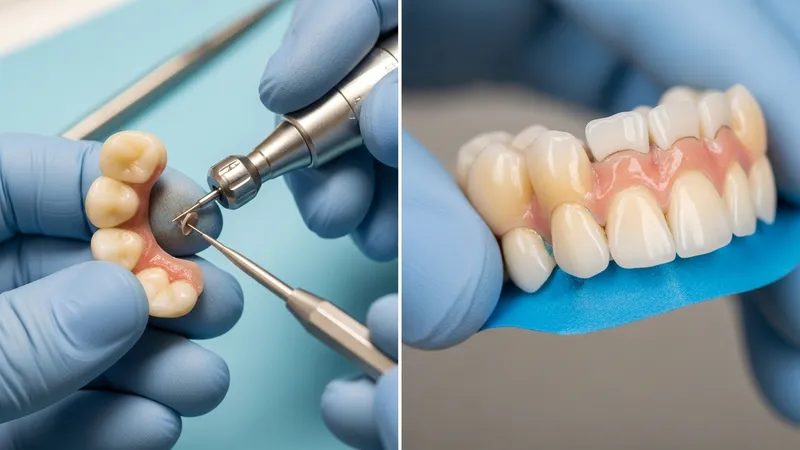
Design principles differ between temporaries and permanents. Provisional contours may be intentionally shaped to support soft tissue healing and to be easily modified, whereas definitive crowns are contoured for long-term hygiene access and occlusal stability. Occlusal management for a provisional often aims to minimize functional loading in the early healing phase, while definitive restorations are designed to restore complete function with appropriate occlusal contacts. These distinctions reflect a stepwise approach to transitioning from immediate to long-term care.
Material considerations impact clinical decisions for same-day placement. Provisional materials may be acrylic-based or composite resins that allow intraoral adjustments; definitive materials may include monolithic ceramics or layered systems intended for sustained durability. The choice may depend on location in the mouth, esthetic demands, and functional load. When immediate implants are provisionally restored, the provisional’s rigidity and occlusal scheme can influence initial mechanical loading during osseointegration, and clinicians typically plan provisionalization accordingly.
Timing of conversion from a temporary to a permanent prosthesis can vary by case. For implant-based treatments, clinicians commonly await evidence of biological integration before placing the final prosthesis, which may take several months. For restorations on natural teeth, clinicians may delay final cementation until soft-tissue contours stabilize or until laboratory-fabricated materials are available. These timelines are influenced by clinical healing patterns and by practitioner judgment about when conditions are appropriate for definitive restoration.